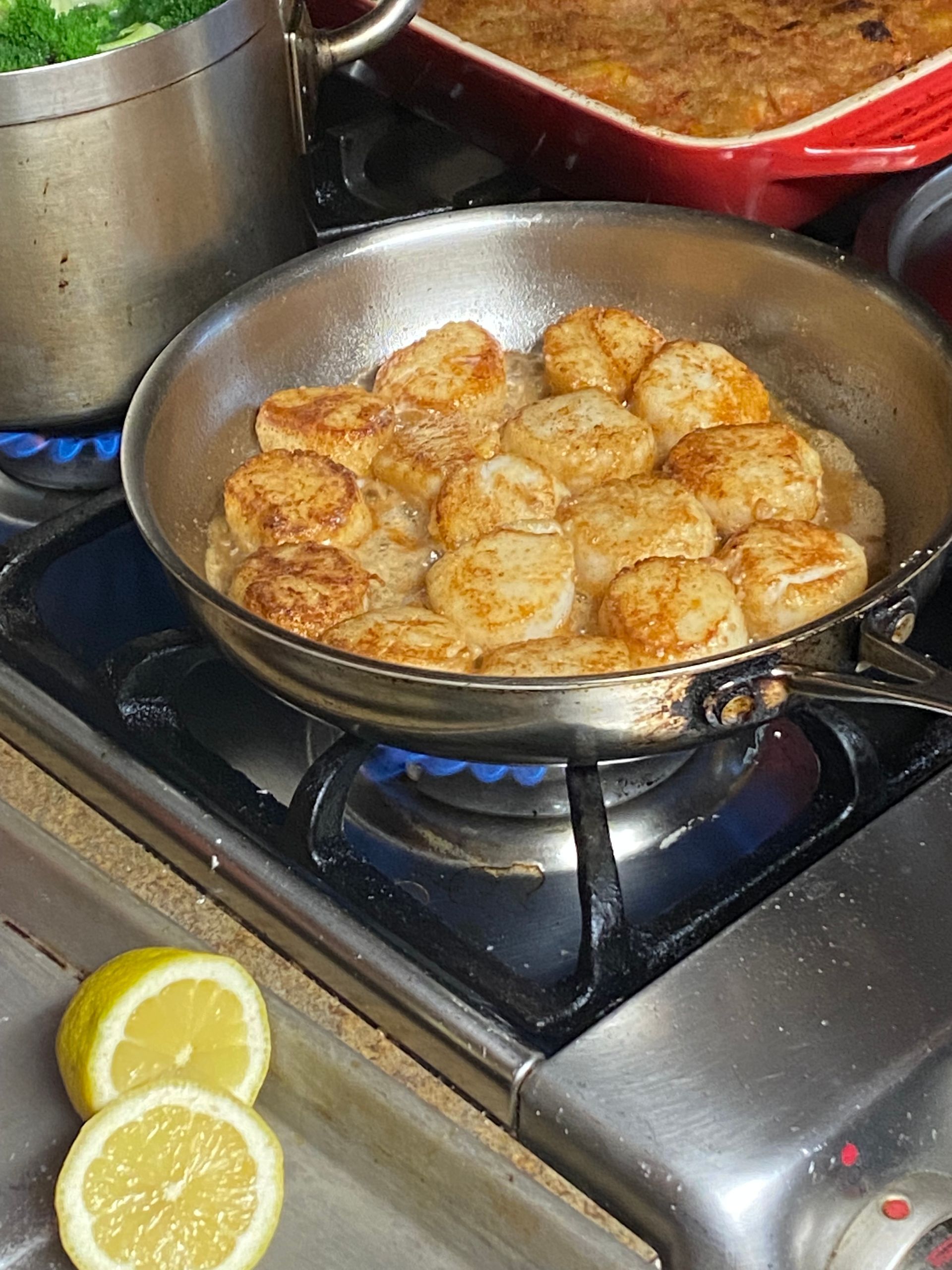
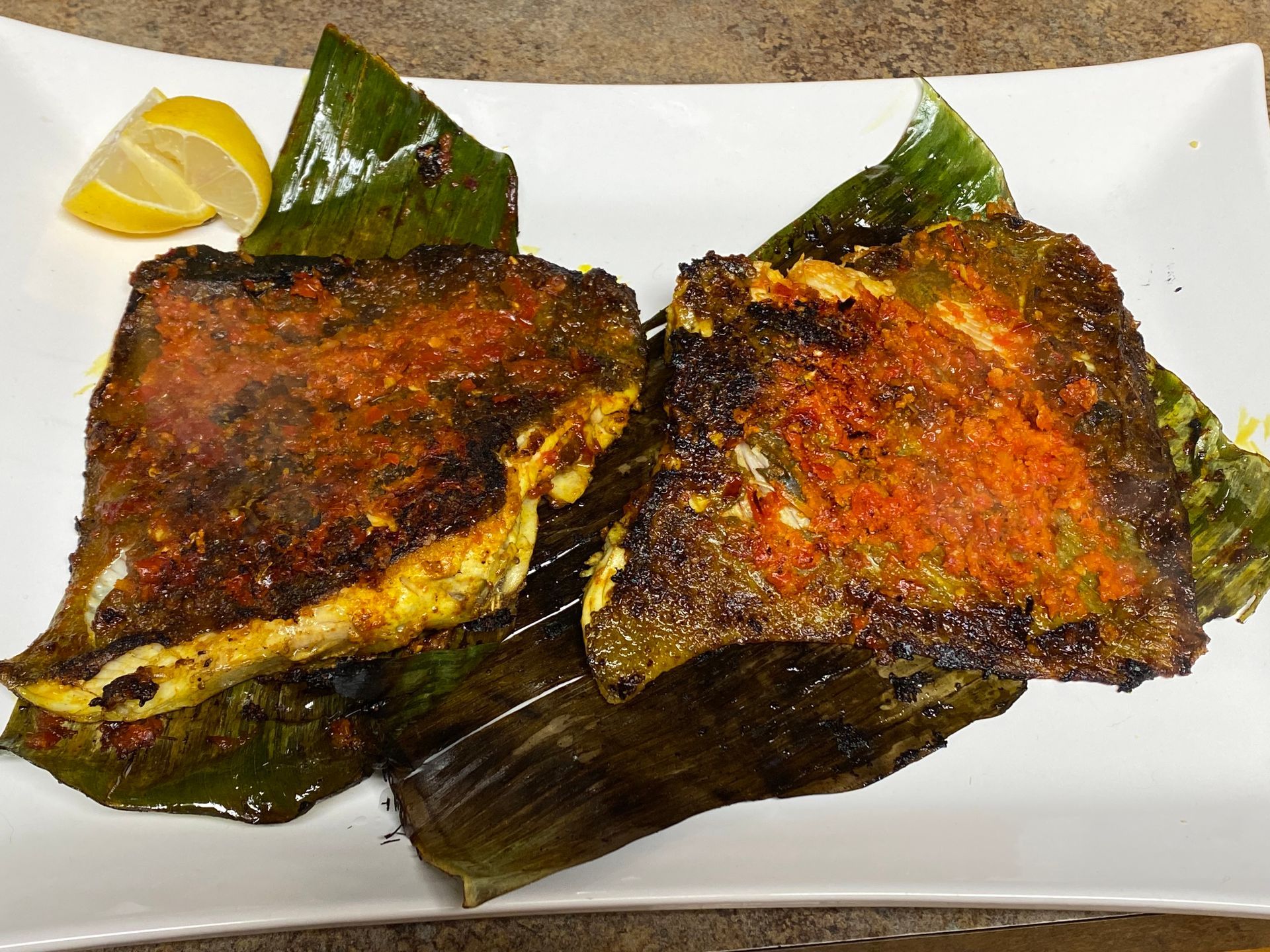
A white plate topped with two pieces of food and a lemon slice.
I first learned about skate at the beginning of my career at Le Cirque in NYC. We received skate wings weekly & it was my responsibility to clean the wings, then gently poach & cool them in court bouillon.
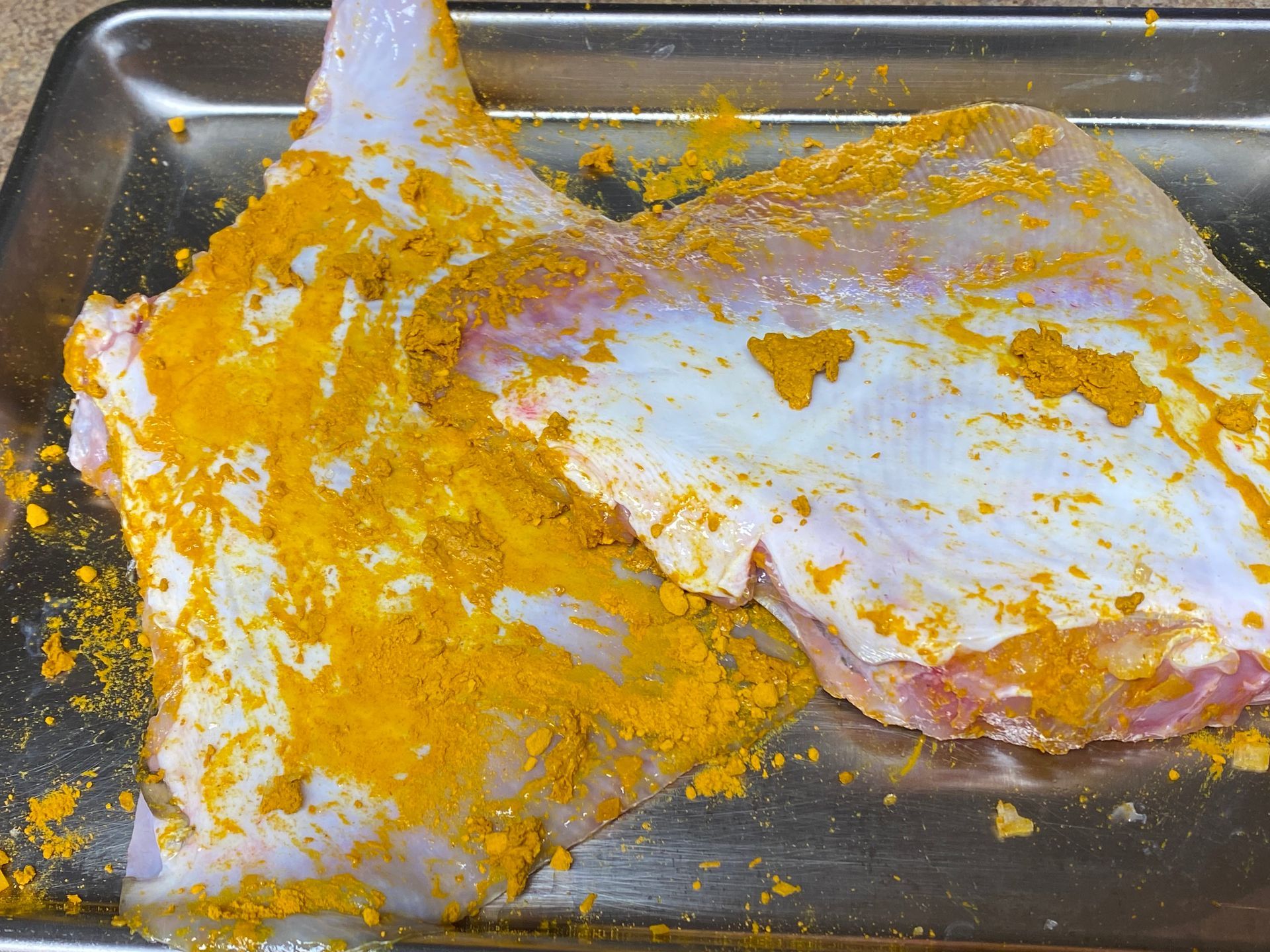
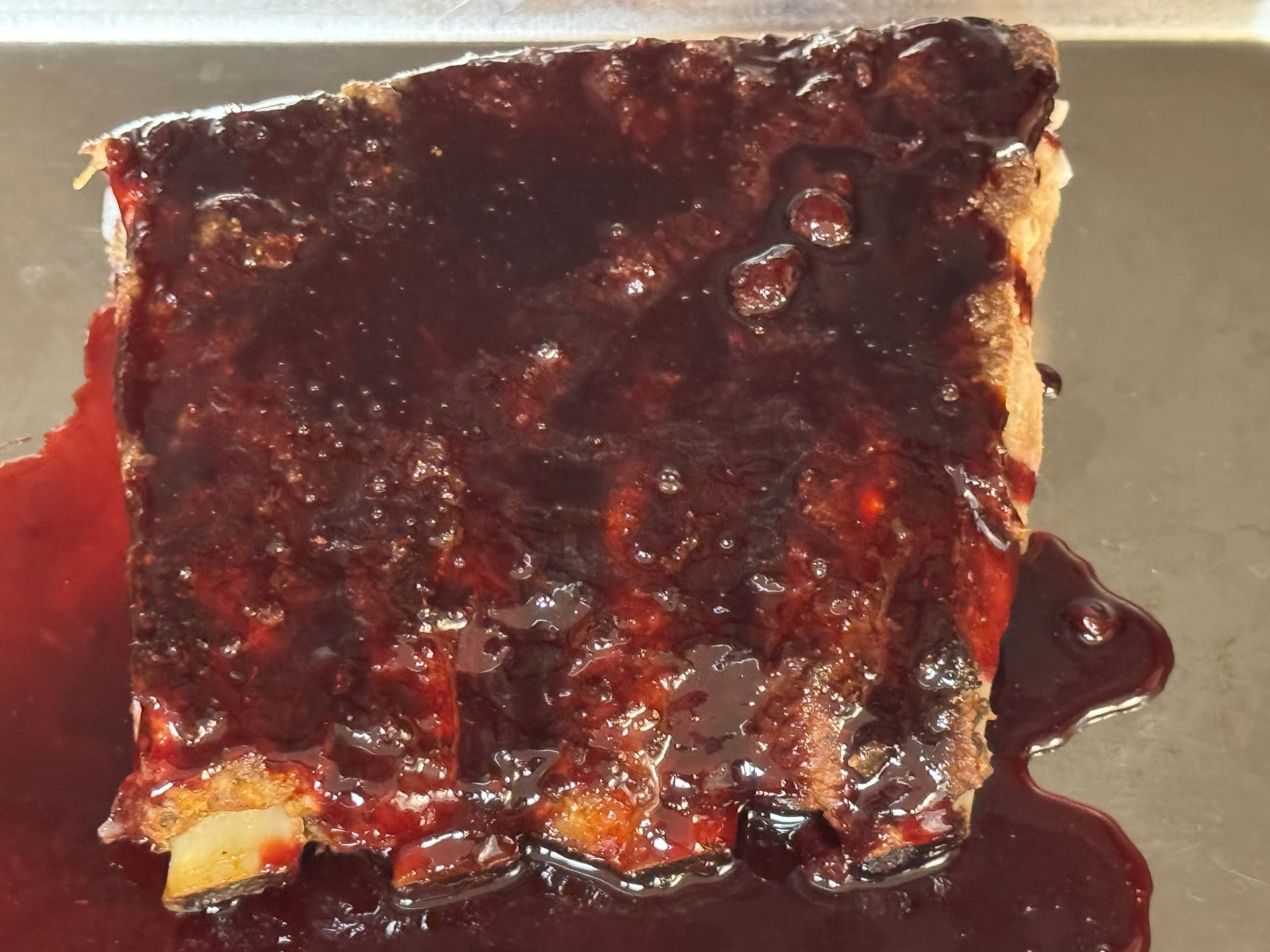
A piece of meat is covered in yellow powder on a metal tray.
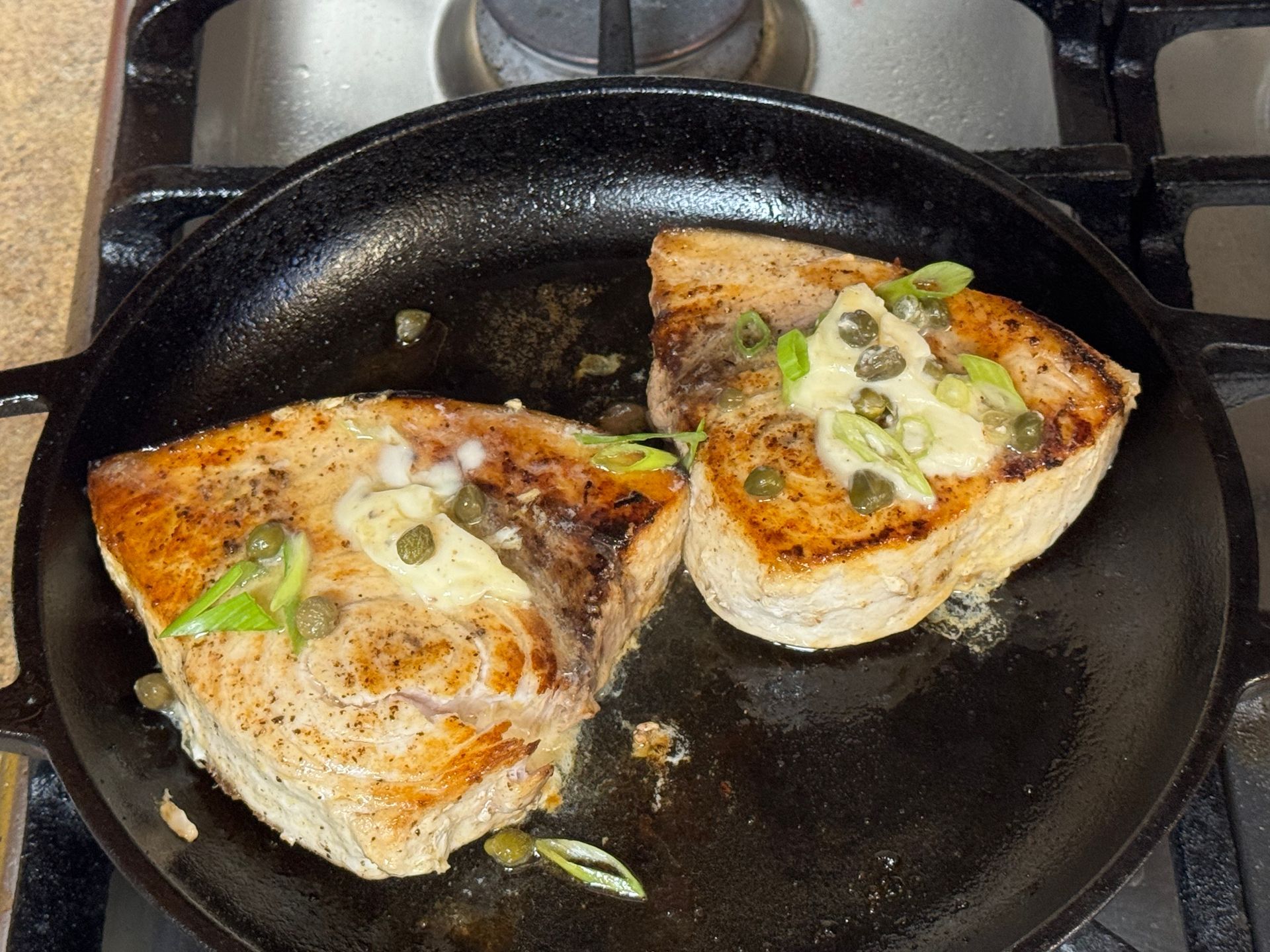
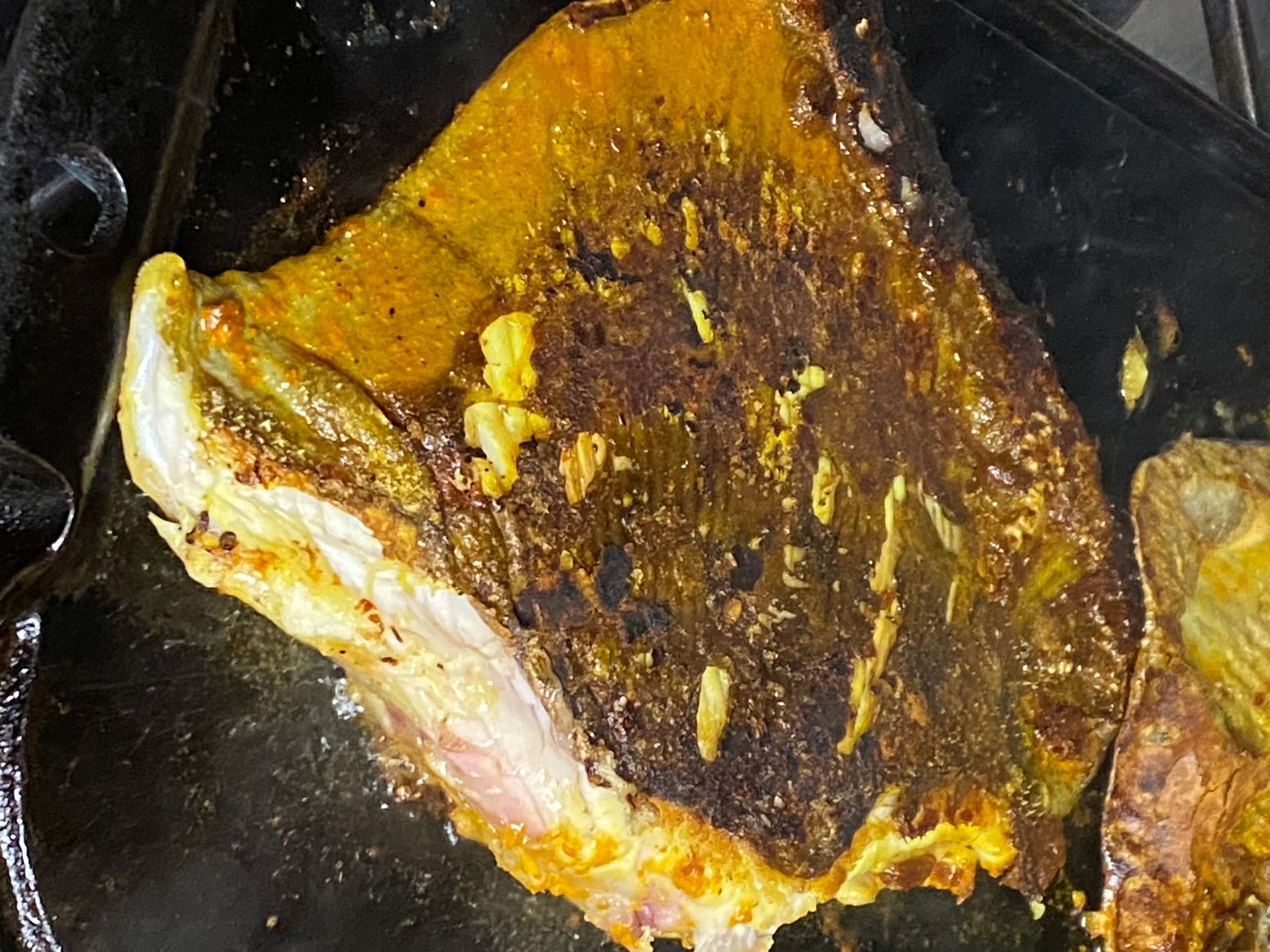
A piece of meat is being cooked on a grill.
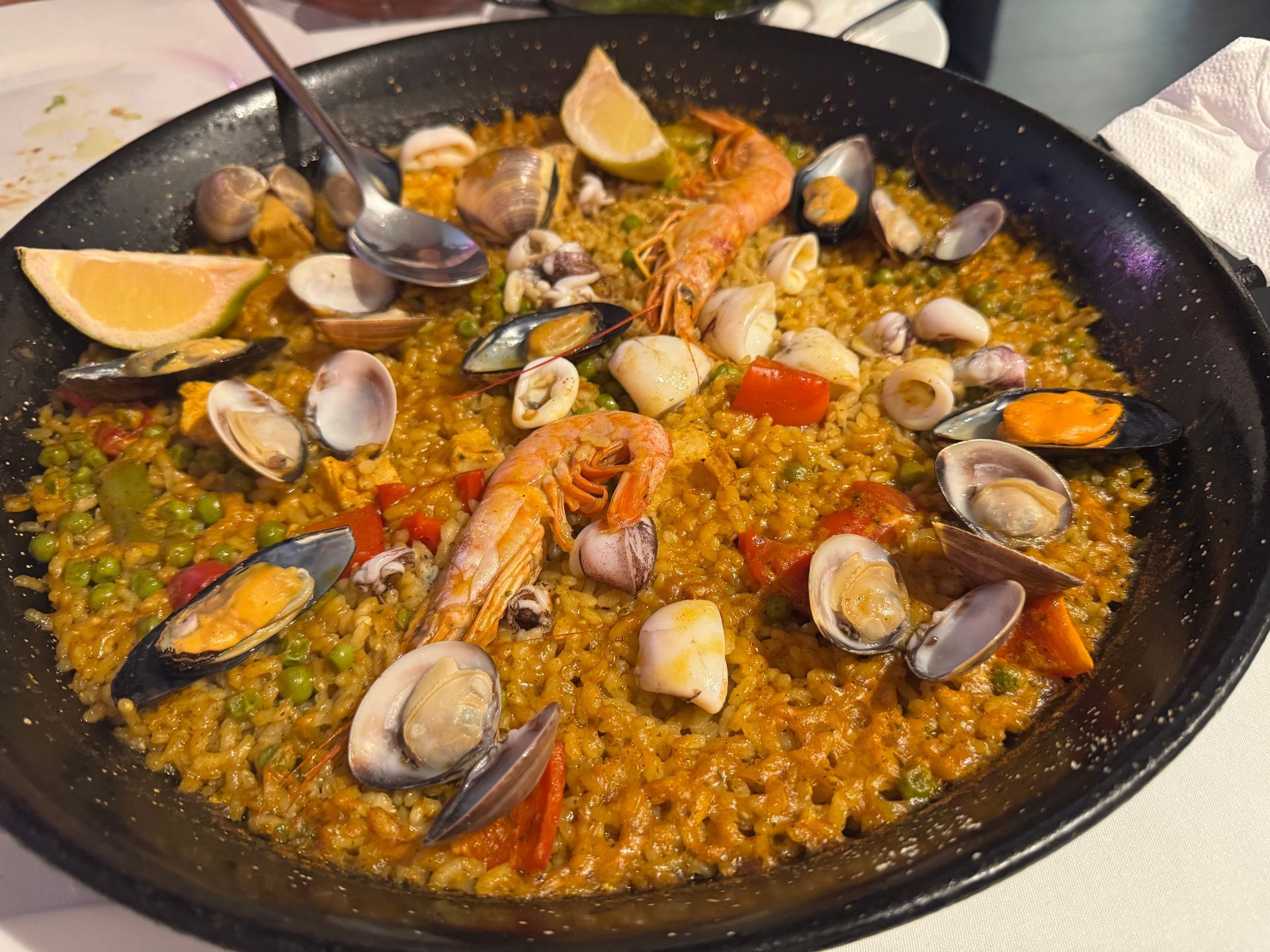
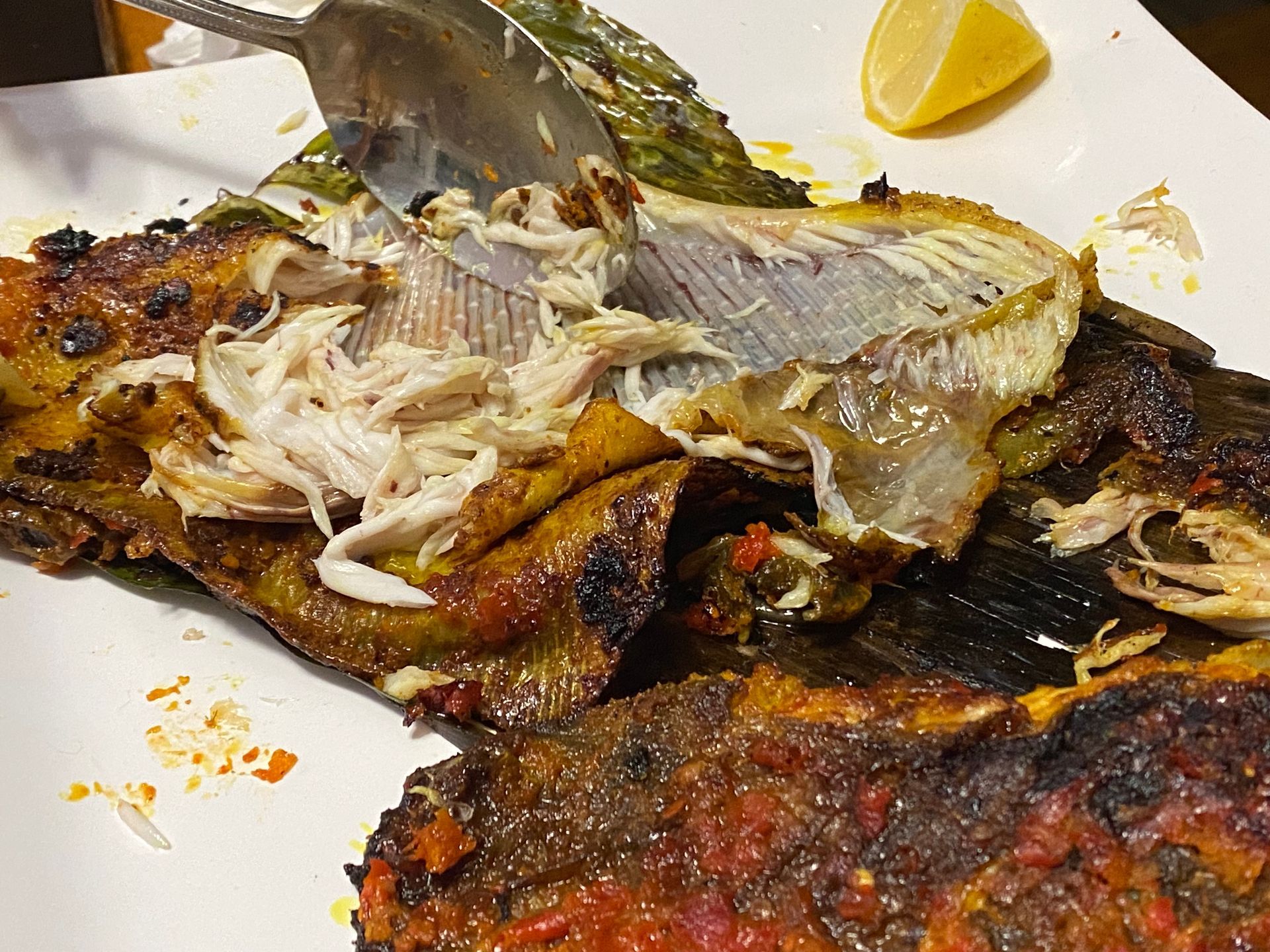
A close up of a plate of food with a spoon in it.

Cooking Skate Wings

I've always found it challenging to peel or slice the skin off of skate wings.

I enjoy sautéed, 'peeled' skate wings with brown or black butter & capers very much.

                                                                                       I still prepare skate wings in this fashion, but my new, preferred method is a simple curry marinade for an hour, then searing the wings on a cast iron grate with a small amount of oil. I get the curry nice and brown, the skin splits and it's very easy to see when the flesh is cooked through.


This is so much easier than cleaning the wings raw or poaching and provides a nice, flavorful crust & moist, juicy flesh. It's super easy to scrape the skin and meat using a fork or spoon.

Prep Time: 3o min

Cooking Time: 30 min (grilling/ resting)

Yield: 4 portions


Ingredients      

4  ea.       Skate wings                      


Seasoning:

6  oz.       Olive oil                                                                     

1 Tbsp     Black pepper     

1/2 tsp     Ginger powder                                                         

1/2 Cup   Curry powder

tt              Kosher Salt   

                  lemons & hot sauce


How to prepare Seared Skate Wings

Step 1

Mix the curry spices and oil together and coat the skate wings well. Let marinate for 30 minutes at room temperature.

Step 2

Heat a cast iron grill pan to medium high; scrub the grill pan and then gently oil to avoid sticking.

Step 3

Place the skate wings onto the grill pan and sear about 6-8 minutes; Invert and continue cooking to reach the desired temperature you enjoy. You'll see the skin splitting and the flesh on the sides to determine doneness-or use a thermometer and cook to 150F.

Step 4

Serve the skate with fresh lemon and hot sauce.
By Tom Griffiths January 7, 2026
I still remember cooking breakfast burritos with my son Daniel, for volunteer workers at church events—simple, hearty, and made to fuel a long day of service. The workers were always so appreciative. Years later, I served a crowd favorite, nicknamed “The Bacon-ator,” a breakfast superstar inspired by the over-the-top spirit of fast-food indulgence. We had a popular food booth at the local country fair, where we cooked hundreds of breakfast burritos each day-stuffed with Mexican cheeses, extra bacon, fluffy scrambled eggs, and fresh salsa—nothing pre-made, nothing rushed. Every burrito was warm, fresh, and full of flavor. When food is made with love, even the most straightforward breakfast is memorable. 
By Tom Griffiths January 6, 2026
Beef Wellington is a restaurant classic! Chefs prepare whole tenderloins, wrapped in pastry as well as individually portioned Wellingtons. Culinary historians widely agree that Beef Wellington evolved from French preparations such as filet de bœuf en croûte, which paired beef tenderloin with mushrooms and pastry—techniques well established in French haute cuisine.
By Tom Griffiths January 4, 2026
Oranges are fantastic in Baking & Pastry. I developed a delicious dessert for the CMC exam (Healthy Cooking) challenge featuring Orange Creamsicle Sorbet with Roasted, Candied Pineapple and Fruit Strudel... with plenty of guidance from the amazing CIA Pastry Instructors! Types of Oranges: There are several distinct varieties of oranges, each with unique characteristics and flavors. The most common type is the Navel orange , recognized for its seedless, sweet flesh and thick, easy-to-peel skin. Valencia oranges are another popular variety, primarily known for their juiciness and are often used for making orange juice. Other notable types include Blood oranges , which have a deep red interior and a distinct berry-like flavor, and Cara Cara oranges , characterized by their pinkish-red flesh and sweet taste. Additionally, Seville oranges , known for their bitterness, are mainly used in making marmalade and flavoring liqueurs. 
By Tom Griffiths January 3, 2026
Flambéed fruits are often used as an accompaniment or variation in desserts like Crêpe Suzette. Common choices for flambéing include bananas, apples, or berries, sautéed in butter and sugar before being doused in a spirit, such as rum or brandy, and set alight. The flambé technique adds excitement to the dining experience! Years ago I was dining at Paul Bocuse with some colleagues and one ordered a f lambé served over rum raisin ice cream. He let me taste and it was amazing.
By Tom Griffiths January 2, 2026
Bell peppers are the sweet, non-pungent members of the Capsicum annuum family, prized for their crisp texture, juiciness, and vibrant colors. Green, red, yellow, and orange peppers are the same fruit at different stages of ripeness, with sweetness increasing as they mature. In the kitchen, bell peppers are valued for their versatility—equally at home raw in salads, roasted for depth and sweetness, or sautéed as a foundational aromatic in countless cuisines.
By Tom Griffiths January 2, 2026
Years ago I was competing in Erfuft, Germany with a CIA Culinary Olympic team. When the competition was over, we had time to walk around Erfurt (home of the famous poet Goethe). There was a man grilling German sausages on a small grill in the center of the town square. I joined the long line of locals purchasing delicious, grilled German sausage with onions-amazing!
By Tom Griffiths January 2, 2026
When I was a student studying culinary arts at the CIA, preparing Caesar salad and fambéed desserts were competencies we were tested on when we were studying in the school restaurants. Caesar salad is delicious for a variety of reasons... croutons fried or toasted with olive oil provides great texture and is delicious, Caesar salad dressing is an 'umami bomb' of flavor... savory and deeply satisfying notes from anchovies, Worcester sauce, aged parmesan cheese and rich, creamy mouthfeel from the fat from egg yolks.. absolutely delicious.
By Tom Griffiths January 2, 2026
Arugula is spicy! It's one of my favorite lettuces to make salads with. I like adding toasted nuts, cheeses and sometimes fruits and berries to arugula for great salads. I prefer an emulsified vinaigrette with honey, olive oil, mustard, lemon & herbs... these days I use a little mayonnaise instead of raw egg yolk for the emulsion.
By Tom Griffiths January 1, 2026
One of my most memorable roast duck meals with in Lyon, France. I was in France with two other CIA instructors, cooking a dinner for expats with the local, French chefs. We dined at Paul Bocuse's restaurant one night and Chef Bocuse came to our table to greet us. He announced he would be roasting a duck for us in the hearth that evening! Can you imagine-the room fell silent and all of the diners looked at us (rather jealousy)...  Three of my favorite duck preparations, each showcasing a different culinary tradition are: Peking Duck (China) A highly refined preparation where the duck is air-dried, roasted until the skin is exceptionally crisp, and traditionally served with thin pancakes, scallions, cucumber, and hoisin sauce. The focus is on lacquered skin and precise carving. I had this meal several times in Beijing with some of the amazing Campbell Soup leadership team. Duck à l’Orange (France) A hallmark of French cuisine, this dish pairs roasted duck with a bittersweet orange sauce made from a gastrique (bitter, caramelized sugar), vinegar, citrus, and stock—highlighting the balance of richness and acidity. Confit de Canard (France) Duck legs are salt-cured, slowly cooked in their own fat, and then crisped before serving. Originally a preservation method, confit delivers deeply savory flavor and meltingly tender meat. I enjoyed duck confit many times with Beaujolais while in France.
By Tom Griffiths December 31, 2025
My favorite shrimp are 16/20 tiger shrimp! I love the crunchy bite and visual appearance. I always get 'shell on' so I can use the shells for stocks and sauces. Shrimp are classified primarily by size, typically expressed as a count per pound (for example, 16/20 or 26/30), with smaller numbers indicating larger shrimp. For shrimp cocktail, larger sizes—such as U10, 16/20, or 21/25—are preferred for their dramatic presentation and juicy bite. Shrimp can be purchased fresh or frozen, head on or off, raw, cooked, peeled... Common types include white shrimp (mild and tender), brown shrimp (slightly firmer with a deeper, iodine-rich flavor), pink shrimp (sweet and delicate), and tiger shrimp or prawns (large, meaty, and visually striking).